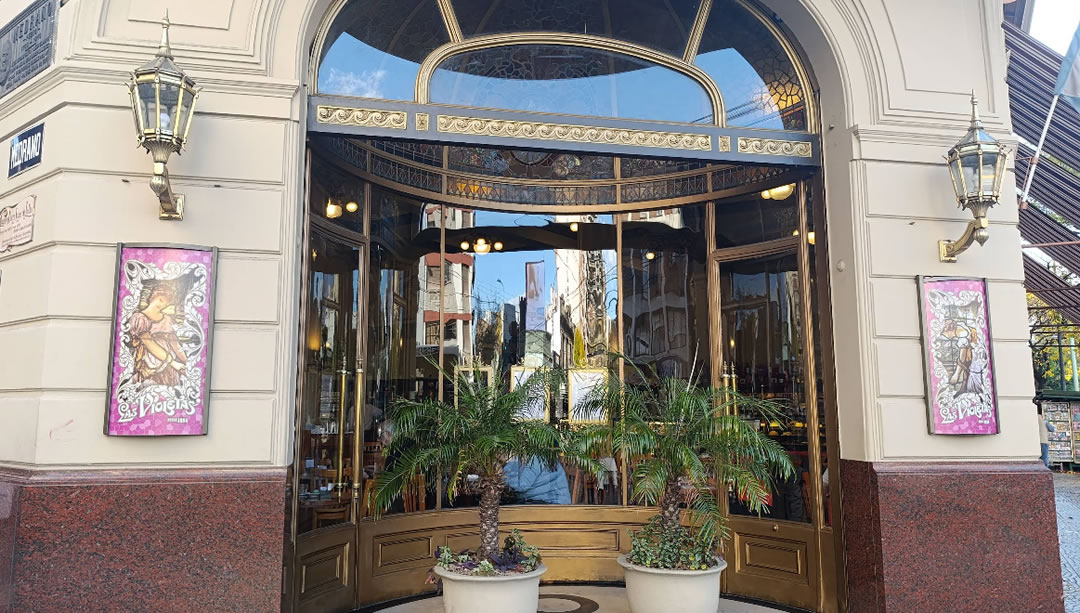
If you want to experience the true luxury of Buenos Aires' golden age, there is no better destination than Café Las Violetas. Located in the residential neighborhood of Almagro at Avenida Rivadavia 3899, this spectacular cafe has been a cornerstone of porteno culture since its grand opening in 1884. With its breathtaking French stained-glass windows, soaring Italian marble columns, and ornate bronze chandeliers, Las Violetas is widely considered a masterpiece of Belle Époque design and was voted the best "Café Notable" by the residents of Buenos Aires.
The Architecture and Stained-Glass Majesty
The defining feature of Las Violetas is its extraordinary architecture. The building underwent a massive restoration in the early 2000s, which fully restored the grand stained-glass windows (vitrales) that wrap around the curved corner of the building. Created by French artists, these windows depict floral designs in brilliant shades of violet, gold, and green, casting a warm, colored light over the grand salon. The floors are made of custom-laid granite mosaics, and the dark wood paneling on the walls is accented with delicate gold leaf. Sitting at one of the dark wooden tables under the grand glass dome feels like sitting in an imperial European ballroom.
Our Review Scores
| Category | Score | Comments |
|---|---|---|
| Atmosphere & Decor | 5.0 / 5.0 | Stunning. The stained glass windows are some of the finest in South America. |
| Food & Pastries | 4.8 / 5.0 | Outstanding cakes and massive portions of traditional Argentine pastries. |
| Service | 4.2 / 5.0 | Classic, professional waitstaff dressed in traditional black-and-white uniforms. |
| Value for Money | 4.5 / 5.0 | Reasonable pricing, especially considering the enormous portion sizes. |
Menu Highlights and Price Guide
While Las Violetas serves a full menu of lunches, dinners, and breakfasts, it is world-famous for its afternoon tea services. The absolute legend of the menu is the "María Cala" tea service. This colossal three-tiered tower comes packed with a selection of sweet pastries, artisanal cakes, savory sandwiches (sándwiches de miga), scones, and toast, accompanied by tea, coffee, orange juice, and a glass of sparkling wine. It is easily enough food to feed three or four people.
- María Cala Afternoon Tea: $22.00 - $25.00 USD (perfect for sharing)
- Café Cortado with 3 Facturas (Argentine pastries): $5.00 USD
- Slices of House Specialty Cakes: $4.50 - $6.00 USD
- Traditional Lunches (Milanesas, pastas): $8.00 - $14.00 USD
Contact and Location Details
- Address: Avenida Rivadavia 3899 (corner of Medrano), Almagro, Buenos Aires
- Phone: +54 11 4958-7387
- Website: www.lasvioletas.com
- Instagram: @lasvioletas-oficial
- Opening Hours: Daily from 6:00 AM to 1:00 AM (Fridays and Saturdays until 2:00 AM).
Practical Tips for Visitors
Due to its legendary status, Las Violetas is highly popular with locals, especially on Sunday afternoons for tea time. To avoid waiting in long lines outside on the sidewalk, try visiting on a weekday morning or late evening. If you order the María Cala tea service, do not eat lunch beforehand—the amount of food is truly massive! Make sure to bring your camera to capture the spectacular light filtering through the vitrales during the golden hour (just before sunset).
A Step Back in Time: The Heritage of Almagro
Almagro is a neighborhood that has historically been closely linked to tango, commerce, and working-class families. When Café Las Violetas first opened its doors in 1884, the surrounding area was still dominated by suburban estates and dirt roads. The café quickly became a civilized oasis where elite families from the city center would travel by carriage to spend their weekend afternoons. The neighborhood grew around the café, with the Rivadavia tram lines eventually passing by its doors. Over the decades, it survived economic crises, changes in ownership, and the threat of demolition in 1998, when a massive citizen campaign declared it a historic landmark, paving the way for the grand restoration of 2001.
The Art of the María Cala Tea Ceremony
In Buenos Aires, the afternoon tea (merienda) is a sacred ritual, and Las Violetas is its cathedral. The "María Cala" is not just a menu item; it is a theatrical performance. When the waiter brings the three-tier stand to your table, neighboring patrons often stop to stare. The bottom tier features freshly baked savory pastries, including warm croissants filled with ham and cheese, and classic Argentine sándwiches de miga (crustless triple-decker sandwiches). The middle tier displays sweet budines (pound cakes), medialunas, and scones served with jam and cream. The top tier features a selection of the café's famous artisanal cakes, such as the classic Lemon Pie or chocolate mousse cake. This feast is accompanied by premium loose-leaf teas, coffees, and a glass of chilled domestic sparkling wine to toast the occasion.
Detailed Dining and Lunch Menu
Although famous for sweets, Las Violetas is also a fully functioning restaurant. The lunch and dinner menus feature traditional Argentine-Italian comfort food. You can order huge breaded cutlets (milanesas) topped with fried eggs and served with fries, or choose from a selection of homemade pastas, such as spinach and ricotta ravioli covered in a rich tuco sauce (a local slow-cooked tomato and beef ragout). The portions are notoriously huge, maintaining the classic Argentine tradition of family-style sharing. The wine list features excellent Malbecs from Mendoza and Torrontés from Salta, selected to pair perfectly with the hearty dishes.
The Architectural Details and Restoration Challenges
When you sit inside Café Las Violetas, you are looking at the result of one of the most complex architectural restoration projects in Buenos Aires' history. During the late 1990s, the cafe suffered from severe neglect. Water leaks threatened the structural integrity of the high plaster ceilings, and several of the historic French stained-glass panels were cracked or completely broken. When the city government intervened in 2001, teams of specialized glass artisans, wood restoration experts, and master plasterers were brought in. They spent months painstakingly matching the original materials used in 1884. The gold leaf accents on the columns were re-applied by hand using traditional techniques, and the massive crystal chandeliers were completely dismantled, cleaned, re-wired, and hung once more. Today, the space looks exactly as it did during its inauguration, representing a triumph of cultural preservation over commercial redevelopment.
What to Order: A Culinary Walkthrough
While the María Cala tea tower is the most famous option, Las Violetas offers a spectacular à la carte menu that is worth exploring. For breakfast, the classic order is a "café con leche" served with three warm medialunas, which are sweet, buttery, and glazed with a light sugar syrup. If you prefer savory options, they serve the traditional "tostado en pan de miga," a thinly sliced, grilled ham and cheese sandwich that is incredibly popular in Argentina. For dessert, their pastry chefs prepare a wide array of classic cakes. The absolute highlight is the "Leguisano" cake, named after a famous Argentine jockey, which features layers of puff pastry, sponge cake, dulce de leche, meringue, and almonds. Every single bite is a sweet journey into the history of Argentine baking.
Exploring Almagro: Beyond the Cafe
A visit to Las Violetas is the perfect starting point for a day of exploring the residential neighborhood of Almagro. This neighborhood is famous for its deep connections to tango music and its traditional, low-key street life. Just a few blocks from the cafe, you can find the Medrano subte station, which connects you to the rest of the city. As you walk through the surrounding tree-lined streets, you will notice beautiful early 20th-century apartment buildings, local fruit markets, and small tango clubs (milongas) that only open late at night. The guides from the local walking tours often recommend stopping at Las Violetas for a mid-afternoon break, as it offers a quiet refuge from the bustling commerce of Avenida Rivadavia.