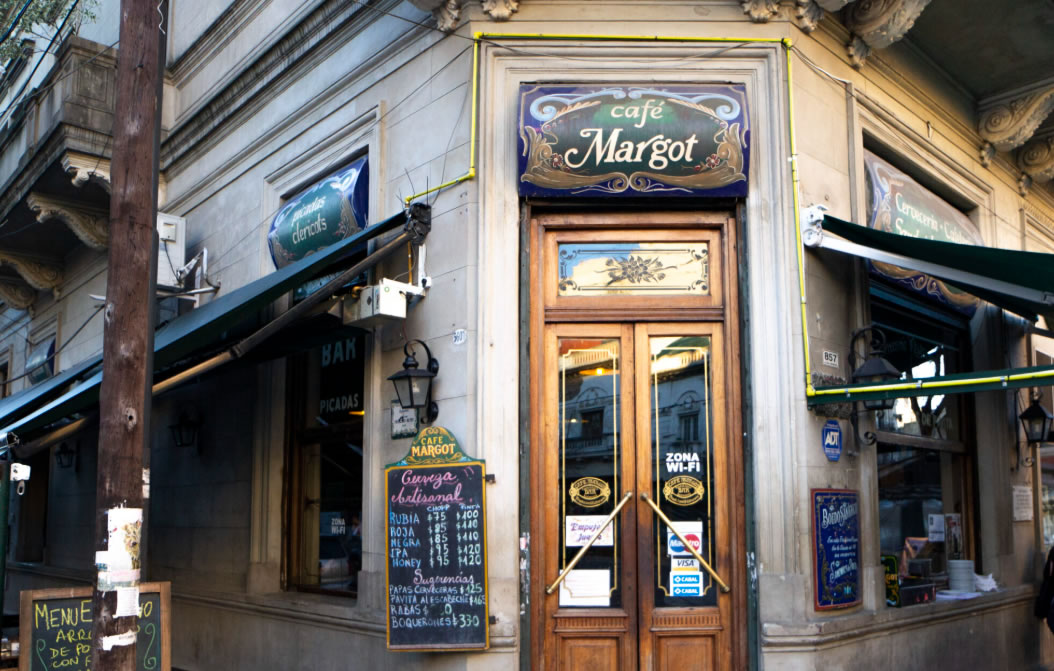
Located in the heart of Boedo, a neighborhood famous for its deep tango roots and working-class literary movements, Café Margot is a legendary designated Café Notable. The building, constructed in 1904, originally operated as a general store before transforming into a café. Over the decades, it became a meeting place for local artists, poets of the Boedo Group, and tango musicians. Today, it retains its retro, nostalgic atmosphere and is celebrated as the birthplace of the city's most famous turkey sandwich.
The Vibe and the Tango History
Café Margot is filled with the spirit of traditional Buenos Aires. Its red leather booths, dark wooden walls, and vintage photos of tango musicians like Homero Manzi create a cozy, neighborhood feel. Unlike the crowded tourist hotspots in the city center, Margot is a place where locals still gather to play chess, read the morning paper, and debate football over a cortado. The basement and surrounding streets are rich with tango history, having inspired many classic tango lyrics written in the mid-20th century.
Our Review Scores
| Category | Score | Comments |
|---|---|---|
| Neighborhood Vibe | 4.9 / 5.0 | Authentic and warm, offering a true local Argentine experience. |
| Sándwich de Pavita | 5.0 / 5.0 | Exceptional. The pickled turkey sandwich is a culinary masterpiece. |
| Service | 4.3 / 5.0 | Friendly, local neighborhood service. |
| Value for Money | 4.5 / 5.0 | Excellent value, very affordable pricing. |
Menu Highlights and Price Guide
Margot serves a full menu of traditional dishes, but it is world-famous for its Sándwich de Pavita (pickled turkey sandwich). Prepared using a secret family recipe of pickled turkey breast served on fresh, soft bread, this sandwich has been a local icon for over 70 years. It is best paired with a cold draft beer (chopp) or a glass of local Malbec wine.
- Sándwich de Pavita (Pickled Turkey Sandwich): $5.50 USD
- Café Cortado with Medialunas: $3.00 USD
- Homemade Flan with Dulce de Leche: $3.50 USD
- Draft Beer (Chopp): $2.50 USD
Contact and Location Details
- Address: Avenida Boedo 857, Boedo, Buenos Aires
- Phone: +54 11 4957-0007
- Website: www.cafemargot.com.ar
- Opening Hours: Daily from 8:00 AM to 2:00 AM.
Boedo and the Bohemians
The neighborhood of Boedo holds a special place in the artistic heart of Buenos Aires. In the 1920s and 30s, it was the birthplace of the Boedo Group, a collection of writers, artists, and socialist intellectuals who believed that art should reflect the struggles of the working class. Café Margot, located at Avenida Boedo 857, was a central meeting point for this group. The building, constructed in 1904, originally functioned as a grocery store, but its transition to a café turned it into a cultural sanctuary. Tango musicians, poets, and writers like Homero Manzi and Álvaro Yunque sat in its leather booths, composing lyrics and debating literature over cheap glasses of wine and strong coffee.
The Legend of the Sándwich de Pavita
While Café Margot is rich in history, its greatest culinary legend is the Sándwich de Pavita (pickled turkey sandwich). Introduced decades ago, this sandwich has become a legendary local institution. The turkey breast is prepared using a traditional pickling technique (escabeche), soaking the meat in a mixture of vinegar, oil, onions, carrots, and spices until it is incredibly tender and packed with flavor. The pickled turkey is then served inside a fresh, soft roll of bread. People travel from all over Buenos Aires to Boedo just to eat this sandwich, paired with a cold glass of draft beer (chopp) or a traditional vermouth (vermut con soda).
A Neighborhood Cultural Center
Unlike the crowded, touristy cafes of the city center, Café Margot remains a genuine neighborhood hangout. It is common to see elderly local residents reading the newspaper, writers working on laptops, and families enjoying a weekend lunch. The café regularly hosts literary talks, tango history exhibitions, and poetry readings, keeping the historical Boedo literary tradition alive. The walls are covered in black-and-white photos of tango singers, old neighborhood maps, and shelves containing vintage books, creating a cozy and authentic neighborhood library atmosphere.
The History of the Building and Boedo Barrio
The building housing Café Margot was constructed in 1904 by the Italian developer Lorenzo Rossi. Initially operating as a general store and tavern, it quickly became a social hub for the neighborhood of Boedo. Boedo was a working-class neighborhood that grew rapidly during the early 20th century due to the expansion of the tram networks. It became famous for its literary and tango heritage, serving as the birthplace of the Boedo Group, a collection of writers and artists who focused on social themes. Café Margot was a central meeting point for these intellectuals, who would sit in the booths for hours discussing literature, politics, and the art of tango over coffee and vermouth.
The Secrets of the Pickled Turkey Sandwich
While the history of the cafe is fascinating, the main draw for local foodies is the legendary Sándwich de Pavita (pickled turkey sandwich). The turkey breast is prepared using a traditional pickling technique known as escabeche, where the meat is slowly cooked and preserved in a mixture of vinegar, oil, onions, carrots, and spices. This makes the meat incredibly tender and packed with flavor. The turkey is then served inside a fresh, soft roll of bread. It is a simple yet perfect sandwich that has remained unchanged for decades, serving as a culinary symbol of the café.
A Genuine Local Hangout
Unlike the crowded cafes of the tourist center, Café Margot remains a genuine neighborhood space. Here, you will see elderly residents playing chess, local writers working on their laptops, and families enjoying a weekend lunch. The café regularly hosts cultural events, tango history talks, and poetry readings, keeping the literary heritage of Boedo alive. The walls are covered in black-and-white photos of tango legends, old neighborhood maps, and shelves of vintage books, creating a warm, cozy atmosphere that feels like a local living room.
Tango and Poetry: The Boedo Artistic Circle
The neighborhood of Boedo was not only a literary hub but also the birthplace of many famous tangos. Homero Manzi, the legendary tango lyricist, wrote some of his most famous pieces in the immediate vicinity of Café Margot. The cafe served as an office, living room, and meeting hall for these creative minds, who found inspiration in the struggles and stories of the local working-class residents. Today, the connection between Boedo, tango, and literature remains a core pillar of Café Margot's identity.